Professional Website Development Guide
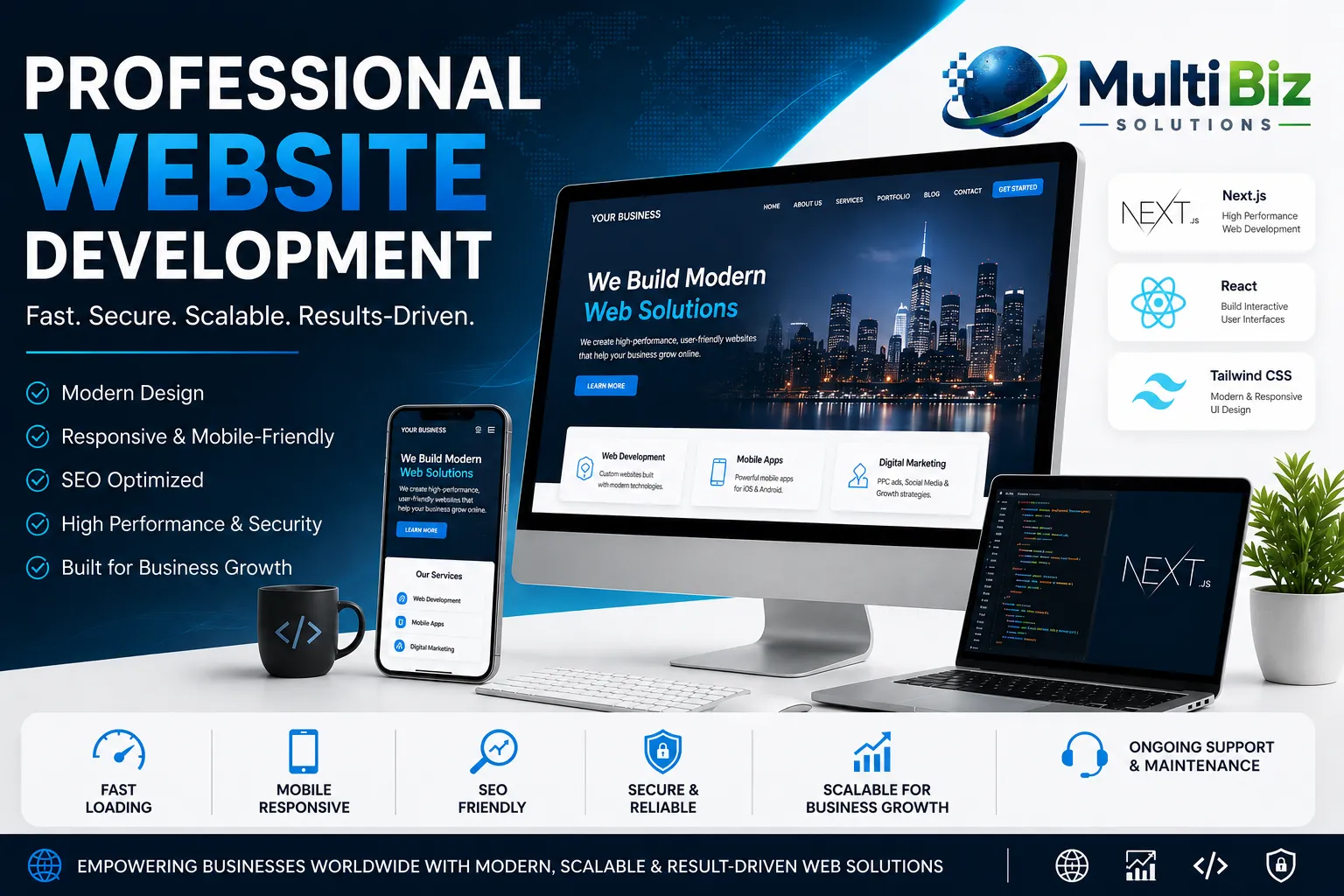
Everything you need to know about planning, designing, developing, and optimizing a high-performing business website that builds trust, generates qualified leads, and supports long-term business growth.
Introduction
A professional website is no longer an optional business asset. It is the digital foundation of your brand and often creates the first impression for potential customers. People search online before making buying decisions. They compare businesses, evaluate credibility, and expect a smooth online experience.
A professionally developed website helps businesses build trust, attract qualified visitors, and convert them into loyal customers. It also supports marketing campaigns, strengthens brand identity, and improves customer engagement.
However, not every website delivers these benefits. Many businesses launch websites that look attractive but fail to generate inquiries or sales. Slow loading speeds, poor navigation, weak search engine optimization, and outdated designs often prevent businesses from achieving their goals.
Professional website development goes far beyond creating visually appealing pages. It combines strategic planning, user experience, responsive design, technical excellence, and search engine optimization into one complete solution. Every element should work together to help visitors find information quickly and encourage them to take action.
Modern technologies have also changed how websites perform. Frameworks such as Next.js provide faster loading times, improved security, excellent scalability, and stronger SEO performance. Businesses that invest in modern web technologies often gain a competitive advantage in both user satisfaction and search engine visibility.
This comprehensive guide explains every stage of professional website development. You will learn how successful websites are planned, designed, developed, optimized, and maintained. Whether you own a startup, a growing company, or an established enterprise, this guide will help you understand what makes a website successful and how it can support your long-term business objectives.
Why Every Business Needs a Professional Website
A business website serves as your digital office. Unlike a physical office, it remains available twenty-four hours a day and reaches customers worldwide. People expect businesses to maintain an informative and trustworthy online presence before making contact.
Here are the most important reasons why every business should invest in professional website development.
Build Instant Credibility
Customers often judge a company within a few seconds of visiting its website. A clean design, fast loading speed, and organized content immediately create confidence.
On the other hand, an outdated website with broken links and poor navigation may cause visitors to leave without making contact. Investing in a professional website demonstrates that your business values quality and customer experience.
Reach Customers Around the World
A professionally developed website removes geographical limitations. Your products and services become accessible to customers across different countries and time zones.
This global accessibility creates new business opportunities without requiring physical offices in multiple locations.
Generate High-Quality Leads
An effective website does much more than display information. It guides visitors toward meaningful actions through carefully designed calls to action. These actions may include:
- Requesting a quotation
- Scheduling a consultation
- Completing an inquiry form
- Calling your business
- Starting a WhatsApp conversation
- Purchasing products online
Each visitor interaction becomes a potential business opportunity.
Strengthen Brand Identity
Your website represents your brand's personality. Every design element contributes to how customers perceive your business. Professional website development ensures consistent use of:
- Brand colors
- Typography
- Logo placement
- Visual identity
- Messaging
- Customer experience
Consistency builds trust and improves brand recognition over time.
Improve Search Engine Visibility
Search engines reward websites that provide excellent user experiences. A professionally developed website follows technical SEO best practices from the beginning. These include:
- Clean coding
- Fast loading speed
- Mobile responsiveness
- Secure HTTPS connection
- Structured content
- Optimized images
- Proper heading hierarchy
These factors help search engines understand your content and improve your chances of ranking higher.
Increase Sales Opportunities
Your website becomes one of your most productive sales representatives. It answers customer questions, explains your services, displays testimonials, and encourages visitors to take action.
Unlike human representatives, your website works continuously without interruption.
Enhance Customer Convenience
Modern customers prefer finding answers online before contacting a business. A professional website provides instant access to essential information. Customers can quickly locate:
- Products
- Services
- Pricing
- Frequently Asked Questions
- Contact Information
- Business Hours
- Customer Reviews
Convenient access improves customer satisfaction while reducing routine inquiries.
Support Every Marketing Campaign
Almost every digital marketing activity directs visitors back to your website. Examples include:
- Google Ads
- Social Media Marketing
- Email Marketing
- Content Marketing
- Search Engine Optimization
- QR Codes
- Business Directories
Without a professionally developed website, marketing campaigns often produce lower conversion rates.
Collect Valuable Customer Data
A business website helps you understand customer behavior through analytics. You can monitor:
- Visitor numbers
- Traffic sources
- Popular pages
- Conversion rates
- Bounce rates
- Customer interests
These insights support better business decisions and more effective marketing strategies.
Gain a Competitive Advantage
Many businesses still operate with outdated websites or no website at all. Investing in professional website development immediately differentiates your business from competitors.
A modern website demonstrates innovation, reliability, and customer commitment.
What Is Professional Website Development?
Professional website development is the structured process of planning, designing, building, testing, launching, and maintaining a website that achieves specific business objectives.
Many people assume website development only involves writing code. In reality, successful websites require expertise from multiple disciplines. Professional website development combines:
- Business strategy
- User experience design
- User interface design
- Frontend development
- Backend development
- Database architecture
- Content strategy
- Search engine optimization
- Security implementation
- Performance optimization
- Ongoing maintenance
Each stage contributes to the overall success of the project.
Strategic Planning
Every successful website begins with careful planning. Developers first identify:
- Business objectives
- Target audience
- Competitor landscape
- Customer journey
- Required functionality
- Conversion goals
Planning reduces development costs and minimizes future revisions.
User Experience (UX) Design
User experience focuses on how visitors interact with the website. Professional UX design ensures users can:
- Navigate easily
- Find information quickly
- Complete actions effortlessly
- Enjoy a smooth browsing experience
An excellent user experience increases engagement and conversion rates.
User Interface (UI) Design
User interface design focuses on visual presentation. Professional UI designers create layouts that balance aesthetics with usability. Important elements include:
- Color schemes
- Typography
- Icons
- Buttons
- Images
- Spacing
- Visual hierarchy
An attractive interface strengthens customer confidence.
Frontend Development
Frontend development transforms design concepts into interactive web pages. Technologies commonly include:
- HTML5
- CSS3
- JavaScript
- React
- Next.js
The frontend controls everything visitors see and interact with.
Backend Development
The backend manages website functionality behind the scenes. It processes:
- Databases
- User accounts
- Authentication
- Forms
- Content management
- Business logic
- API integrations
A reliable backend ensures stable website performance.
Database Integration
Many business websites require secure databases. These databases store:
- Customer information
- Product details
- Orders
- Blog articles
- Inquiry forms
- Appointment requests
Modern platforms such as Supabase provide scalable and secure database solutions.
Search Engine Optimization
Professional website development includes SEO from the beginning. Technical optimization includes:
- Clean URLs
- Meta tags
- Structured headings
- Image optimization
- Schema markup
- XML sitemaps
- Robots.txt configuration
These improvements increase search engine visibility.
Security Implementation
Website security protects both businesses and customers. Professional developers implement:
- SSL certificates
- Secure authentication
- Input validation
- Data encryption
- Firewall configuration
- Regular security updates
Strong security reduces cyber risks and improves customer confidence.
Performance Optimization
Website speed directly affects user experience and search engine rankings. Professional developers optimize:
- Images
- JavaScript
- CSS
- Caching
- Content Delivery Networks
- Server-side rendering
- Lazy loading
Fast websites retain more visitors and achieve higher conversion rates.
Continuous Maintenance
Website development does not end after launch. Regular maintenance includes:
- Security updates
- Content updates
- Backup management
- Performance monitoring
- Bug fixes
- SEO improvements
- Feature enhancements
Continuous maintenance keeps your website competitive and reliable.
Benefits of Professional Website Development
A professionally developed website is much more than an online brochure. It is a powerful business asset that supports marketing, strengthens customer relationships, and drives sustainable growth. Every feature, page, and interaction should contribute to achieving your business objectives.
The following benefits explain why businesses of all sizes invest in professional website development.
Improve Brand Credibility
Your website often creates the first impression of your business. Visitors quickly evaluate your professionalism based on your website's appearance, performance, and usability.
A professionally designed website communicates reliability, trustworthiness, and attention to detail. It reassures potential customers that your business is established and committed to delivering quality services. On the other hand, outdated designs, broken links, or slow-loading pages can damage your reputation before a conversation even begins.
Generate More Qualified Leads
A business website should actively generate leads rather than simply display information. Professional website development includes strategically placed calls-to-action that encourage visitors to take the next step. Examples include:
- Request a Quote
- Book a Free Consultation
- Download a Resource
- Contact Our Team
- Get Started Today
- Schedule a Demo
Well-designed landing pages and optimized inquiry forms increase conversion rates by making it easy for visitors to engage with your business.
Increase Online Visibility
Even the most attractive website provides little value if customers cannot find it. Professional developers build websites using technical SEO best practices that improve visibility in search engines. These include:
- Optimized page titles
- Meta descriptions
- Structured headings
- Mobile responsiveness
- Fast loading speeds
- Image optimization
- Clean website architecture
Higher visibility results in more organic traffic and reduced dependence on paid advertising.
Deliver an Outstanding User Experience
Visitors expect websites to be intuitive and easy to navigate. Professional website development focuses on creating seamless user experiences through:
- Clear navigation menus
- Logical page structures
- Fast page loading
- Readable typography
- Accessible content
- Responsive layouts
Satisfied visitors remain on your website longer and are more likely to become customers.
Strengthen Customer Trust
Trust plays a critical role in purchasing decisions. A professional website demonstrates transparency by presenting:
- Company information
- Team profiles
- Customer testimonials
- Certifications
- Privacy policies
- Secure payment methods
- Contact information
These elements reassure visitors that they are dealing with a legitimate business.
Support Business Growth
Your website should grow alongside your business. Professional website development uses scalable technologies that allow future expansion without rebuilding the entire website. Examples include:
- Adding new services
- Launching an online store
- Introducing customer portals
- Expanding into multiple languages
- Integrating new software
Scalability protects your investment over the long term.
Reduce Marketing Costs
Traditional marketing often requires continuous spending. A well-optimized website continues generating traffic through search engines long after publication. This creates a steady flow of visitors without increasing advertising costs.
Over time, content marketing and SEO deliver a significantly lower cost per lead than many paid marketing channels.
Improve Customer Support
A professional website answers many customer questions before they contact your business. Helpful resources include:
- Frequently Asked Questions
- Service descriptions
- Knowledge bases
- Tutorials
- Blog articles
- Contact forms
- Live chat
This reduces repetitive inquiries and allows your team to focus on higher-value activities.
Enhance Security
Cybersecurity is essential for every modern business. Professional developers implement multiple security layers, including:
- SSL encryption
- Secure authentication
- Firewall protection
- Regular software updates
- Malware monitoring
- Automated backups
Strong security protects customer information and business reputation.
Improve Website Performance
Website performance directly influences visitor satisfaction. Professional developers optimize:
- Server response times
- Images
- Code structure
- Database queries
- Browser caching
- Content delivery networks
Even a one-second improvement in loading speed can significantly increase conversion rates.
Increase Revenue Opportunities
Every visitor represents a potential customer. Professional website development improves the customer journey by guiding visitors toward meaningful actions.
Whether visitors purchase products, request quotations, or schedule consultations, an optimized website helps convert interest into revenue.
Deliver Measurable Results
Unlike traditional advertising, websites provide measurable performance data. Analytics tools help monitor:
- Visitor numbers
- User behavior
- Traffic sources
- Conversion rates
- Popular pages
- Sales performance
Businesses can continuously improve their websites using real performance data.
Comparison: Professional vs. Basic Website
| Feature | Basic Website | Professional Website |
|---|---|---|
| Mobile Responsive | Sometimes | ✔ Fully Responsive |
| SEO Optimized | Limited | ✔ Comprehensive |
| Loading Speed | Average | ✔ Optimized |
| Security | Basic | ✔ Advanced |
| User Experience | Standard | ✔ Professionally Designed |
| Conversion Strategy | Minimal | ✔ Goal-Oriented |
| Scalability | Limited | ✔ Easily Expandable |
| Maintenance | Often Neglected | ✔ Planned & Ongoing |
| Search Engine Visibility | Low | ✔ High Potential |
| Business Growth Support | Limited | ✔ Long-Term Focus |
Types of Business Websites
Every business has unique objectives. Therefore, website development should reflect the specific needs of each organization. Selecting the right website type improves user experience and increases conversion opportunities. Below are the most common categories.
Corporate Website
Corporate websites represent established companies and organizations. Their primary objectives include:
- Building credibility
- Presenting company information
- Showcasing services
- Publishing corporate news
- Generating business inquiries
Ideal for manufacturers, consulting firms, financial institutions, engineering companies, and service providers.
Business Profile Website
A business profile website introduces a company, its expertise, and its services. It is ideal for businesses seeking online visibility without complex functionality. Typical pages include:
- Home
- About
- Services
- Portfolio
- Contact
E-Commerce Website
An e-commerce website enables customers to purchase products online. Essential features include:
- Product catalog
- Shopping cart
- Secure payments
- Order tracking
- Customer accounts
- Inventory management
Ideal for retailers and manufacturers.
Portfolio Website
Portfolio websites showcase completed projects and professional achievements. Creative professionals commonly use them to attract new clients. Suitable for:
- Designers
- Architects
- Developers
- Photographers
- Marketing agencies
Educational Website
Educational websites provide learning resources and online courses. Common features include:
- Student registration
- Course management
- Learning portals
- Online assessments
- Progress tracking
Healthcare Website
Healthcare providers require websites that offer reliable information and appointment scheduling. Typical features include:
- Doctor profiles
- Appointment booking
- Medical services
- Patient resources
- Contact information
Restaurant and Catering Website
Restaurants and catering businesses benefit from visually appealing websites that showcase menus and encourage bookings. Essential features include:
- Food galleries
- Catering packages
- Reservation forms
- Online inquiries
- Customer reviews
- Location maps
Real Estate Website
Real estate websites simplify property searches through advanced filtering. Common features include:
- Property listings
- Virtual tours
- Maps
- Mortgage calculators
- Inquiry forms
Travel and Tourism Website
Travel businesses require websites that inspire confidence and simplify booking. Typical features include:
- Tour packages
- Booking forms
- Destination guides
- Customer reviews
- Image galleries
Software as a Service (SaaS) Website
SaaS companies require websites focused on customer acquisition and subscription management. Common elements include:
- Product demonstrations
- Pricing plans
- Free trials
- Customer testimonials
- Knowledge base
Landing Page
Landing pages focus on a single marketing objective. They typically support:
- Google Ads
- Social media campaigns
- Product launches
- Lead generation
- Event registrations
Simple designs often produce higher conversion rates.
Essential Features Every Professional Website Should Have
Modern business websites must satisfy both visitors and search engines. The following features form the foundation of successful professional website development.
Responsive Design
Your website must perform perfectly across desktops, tablets, and smartphones. Responsive design automatically adjusts layouts to different screen sizes, ensuring every visitor enjoys a consistent experience.
Fast Loading Speed
Visitors expect websites to load within seconds. Optimizing images, minimizing code, and using efficient hosting technologies significantly improve loading performance. Fast websites also receive better search engine rankings.
Search Engine Optimization
SEO should be integrated during development rather than added later. Important SEO elements include:
- Structured headings
- Optimized metadata
- Clean URLs
- Schema markup
- XML sitemap
- Internal linking
Secure HTTPS Connection
SSL certificates encrypt communication between visitors and your website. HTTPS improves trust while protecting sensitive customer information. Search engines also favor secure websites.
Easy Navigation
Clear menus help visitors find information quickly. Simple navigation reduces frustration and encourages users to explore additional pages.
Contact and Inquiry Forms
Every business website should provide convenient communication options. Well-designed forms increase inquiries while collecting valuable customer information.
WhatsApp Integration
Many customers prefer instant messaging over traditional emails. A WhatsApp chat button enables immediate communication and often improves conversion rates.
Social Media Integration
Social media icons help visitors connect with your brand across multiple platforms. These integrations strengthen customer engagement and improve brand awareness.
Customer Reviews and Testimonials
Positive customer feedback builds trust and influences purchasing decisions. Displaying authentic testimonials increases credibility and encourages new inquiries.
Blog Section
Publishing high-quality articles demonstrates expertise while supporting long-term SEO. Regular blogging attracts organic visitors and positions your business as an industry authority.
Google Maps Integration
Interactive maps simplify navigation for customers visiting physical locations. They also improve local search visibility.
Professional Image Gallery
High-quality images communicate professionalism and strengthen visual appeal. Optimized image galleries improve engagement without slowing website performance.
Analytics Integration
Website analytics reveal valuable information about visitor behavior. Businesses can monitor traffic sources, user engagement, and conversions to guide future improvements.
Backup and Recovery
Automated backups protect valuable business data. Reliable recovery procedures minimize downtime if unexpected problems occur.
Accessibility Compliance
Accessible websites serve users with diverse abilities. Professional developers implement accessibility standards that improve usability for everyone while supporting inclusive design principles.
Key Takeaways
Professional website development is a strategic investment rather than a technical expense. A well-designed website improves credibility, attracts qualified visitors, generates valuable leads, and supports long-term business growth. By selecting the right website type and incorporating essential features from the outset, businesses create a strong digital foundation that continues delivering value for years.
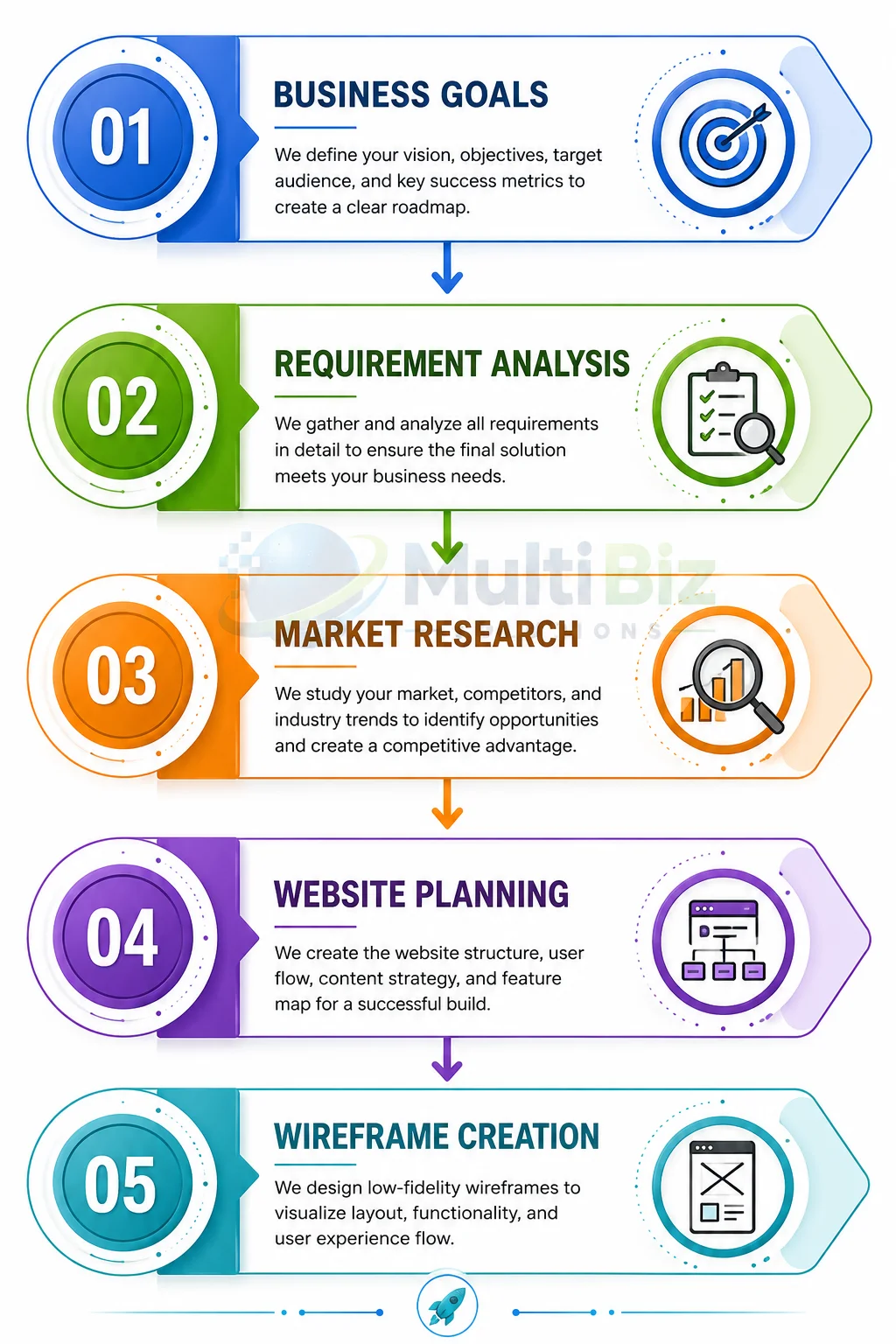
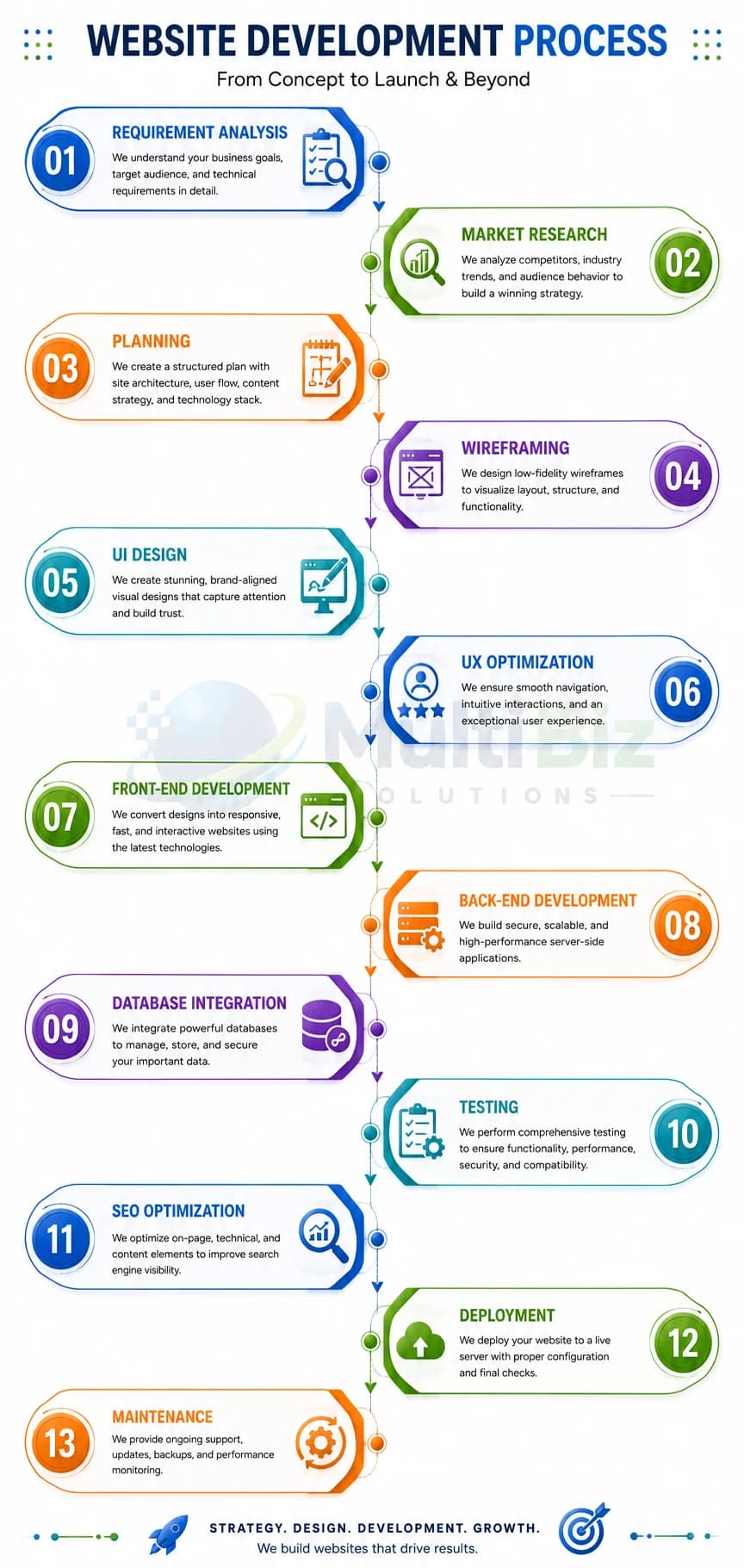
The Complete Website Development Process
Professional website development follows a structured methodology rather than simply writing code. Each stage contributes to building a secure, scalable, and user-friendly website that supports business objectives.
Skipping any phase often leads to increased costs, delays, and poor user experiences. The following process reflects industry best practices adopted by leading web development agencies.
Step 1: Understanding Business Requirements
Every successful website begins with a clear understanding of the client's business. Developers first gather information about:
- Business objectives
- Target audience
- Products and services
- Brand identity
- Competitors
- Customer expectations
- Budget
- Timeline
This discovery phase establishes the foundation for the entire project. Deliverables: Requirement Analysis Document, Project Scope, Feature List, and Initial Sitemap.
Step 2: Competitor and Market Research
Professional developers never build websites without first studying the market. Competitor research helps identify:
- Industry design trends
- Customer expectations
- Navigation styles
- Marketing strategies
- Unique selling propositions
- Content opportunities
Instead of copying competitors, developers identify opportunities to build something even better. Questions to answer: What works well? What can be improved? What features are missing? How can the new website stand out?
Step 3: Website Planning
Planning converts ideas into a structured roadmap. During this phase, developers define:
- Website architecture
- User journeys
- Navigation menus
- Content hierarchy
- Call-to-action placement
- Functional requirements
Good planning minimizes revisions during development.
Step 4: Wireframing
Wireframes represent the blueprint of the website. They focus on:
- Layout
- Navigation
- Content placement
- User interaction
- Conversion flow
Since wireframes exclude colors and graphics, stakeholders can concentrate on functionality rather than appearance.
Step 5: UI Design
User Interface (UI) design transforms wireframes into visually engaging pages. Professional designers carefully select:
- Brand colors
- Typography
- Icons
- Illustrations
- Photography
- Buttons
- White space
Every design decision supports readability and user engagement. A clean interface creates confidence and encourages visitors to explore further.
Step 6: UX Optimization
User Experience (UX) determines how easily visitors interact with the website. Professional UX focuses on:
- Simplicity
- Speed
- Accessibility
- Consistency
- Ease of navigation
Visitors should complete important tasks without confusion — requesting quotations, booking appointments, purchasing products, or completing inquiry forms.
Step 7: Front-End Development
Front-end development converts approved designs into interactive web pages. Modern technologies include HTML5, CSS3, JavaScript, React, and Next.js. Professional front-end development ensures:
- Responsive design
- Fast loading
- Interactive features
- Cross-browser compatibility
- Accessibility
Step 8: Back-End Development
The back-end powers the website behind the scenes. It manages:
- Databases
- User authentication
- Business logic
- Forms
- APIs
- File storage
- Email systems
Without a reliable backend, even the most attractive website cannot function effectively.
Step 9: Database Integration
Dynamic websites require secure database management. Typical information stored includes customer inquiries, orders, products, blog posts, users, and appointments.
Modern cloud platforms such as Supabase simplify database management while improving security and scalability.
Step 10: Content Integration
Content remains one of the most important ranking factors. Professional website development ensures:
- SEO-friendly headings
- Optimized images
- Internal linking
- Readable formatting
- Clear calls-to-action
Content should educate, engage, and convert visitors.
Step 11: Testing
Every website should undergo comprehensive testing before launch. Testing includes:
- Functional testing — contact forms, buttons, links, navigation, and search functionality
- Performance testing — loading speed, server response, and image optimization
- Compatibility testing — Chrome, Edge, Safari, and Firefox
- Mobile testing — smartphones, tablets, and different screen sizes
- Security testing — SSL, authentication, and form validation
Step 12: Search Engine Optimization
Technical SEO begins before the website goes live. Developers optimize:
- Meta titles
- Meta descriptions
- Image alt text
- Heading structure
- Schema markup
- XML sitemap
- Robots.txt
Strong SEO improves long-term visibility.
Step 13: Website Launch
Launching a website involves much more than uploading files. Professional launch procedures include:
- DNS configuration
- SSL installation
- Performance verification
- Analytics setup
- Search Console integration
- Final testing
A smooth launch minimizes downtime.
Step 14: Ongoing Maintenance
Professional website development never truly ends. Continuous improvements include:
- Security updates
- Backup management
- SEO improvements
- Performance monitoring
- Bug fixes
- Content updates
- Feature enhancements
Regular maintenance keeps the website secure and competitive.
Next.js vs WordPress: Which Platform Should You Choose?
Businesses often ask whether they should choose Next.js or WordPress. Both platforms have strengths, but they serve different purposes. Understanding these differences helps businesses make informed decisions.
What Is WordPress?
WordPress is a popular content management system that enables users to build websites without extensive programming knowledge. It powers millions of websites worldwide because of its flexibility and large plugin ecosystem. WordPress works well for:
- Blogs
- Small business websites
- News portals
- Membership sites
- Basic online stores
What Is Next.js?
Next.js is a modern React framework designed for high-performance web applications. It offers:
- Server-side rendering
- Static site generation
- Excellent SEO
- Fast loading speeds
- Superior scalability
- Enhanced security
Many technology companies prefer Next.js for enterprise-grade websites.
Feature Comparison
| Feature | Next.js | WordPress |
|---|---|---|
| Loading Speed | ⭐⭐⭐⭐⭐ | ⭐⭐⭐ |
| SEO Performance | ⭐⭐⭐⭐⭐ | ⭐⭐⭐⭐ |
| Security | ⭐⭐⭐⭐⭐ | ⭐⭐⭐ |
| Performance | ⭐⭐⭐⭐⭐ | ⭐⭐⭐ |
| Scalability | ⭐⭐⭐⭐⭐ | ⭐⭐⭐ |
| Plugin Dependency | Very Low | High |
| Maintenance | Low | Moderate |
| Customization | Unlimited | Plugin-Based |
| Developer Flexibility | Excellent | Moderate |
| Best for Large Businesses | ✔ | Limited |
| Best for Blogs | Good | Excellent |
Why Businesses Prefer Next.js
Modern businesses increasingly choose Next.js because it offers significant advantages.
Faster performance — Next.js pre-renders pages, allowing them to load much faster than many traditional websites. Fast websites improve user satisfaction and search rankings.
Better SEO — search engines easily index server-rendered pages. This improves visibility and organic traffic.
Enhanced security — Next.js eliminates many common vulnerabilities associated with plugin-heavy systems. Fewer plugins mean fewer security risks.
Superior scalability — businesses can easily expand their websites without compromising performance. This makes Next.js ideal for growing organizations.
Excellent user experience — visitors enjoy instant page transitions, faster loading, smooth navigation, and responsive interfaces. Better experiences increase conversions.
When WordPress Makes Sense
WordPress remains an excellent choice when businesses require frequent content publishing, large editorial teams, plugin-specific functionality, or budget-friendly development.
Choosing the right platform depends on business objectives rather than popularity alone.
Common Website Development Mistakes to Avoid
Even attractive websites can fail if they overlook fundamental principles. Avoiding these common mistakes improves performance and customer satisfaction.
Ignoring Mobile Users
More than half of global website traffic now comes from mobile devices. A website that performs poorly on smartphones loses valuable business opportunities.
Slow Loading Speed
Visitors rarely wait for slow websites. Compress images, optimize code, and use modern frameworks to improve speed.
Poor Navigation
Confusing menus frustrate visitors. Simple navigation helps users quickly locate important information.
Weak Calls-to-Action
Every page should encourage visitors to take the next step. Examples include Contact Us, Request a Quote, Book Consultation, and Get Started.
Low-Quality Content
Content should answer customer questions while demonstrating expertise. Helpful articles also strengthen SEO.
Ignoring Search Engine Optimization
Without SEO, even beautiful websites remain invisible. Optimization should begin during development.
Overusing Animations
Animations should enhance user experience rather than distract visitors. Excessive effects often reduce performance.
Weak Security
Businesses should never ignore cybersecurity. Implement HTTPS, secure passwords, firewalls, regular updates, and automated backups.
Missing Analytics
Without analytics, businesses cannot measure success. Every professional website should monitor traffic, conversions, bounce rates, and user behavior.
No Maintenance Strategy
Technology changes constantly. Regular updates ensure your website remains secure, fast, and competitive.
Key Takeaways
Professional website development is a structured process that combines strategic planning, modern technology, exceptional design, and continuous optimization. Businesses that invest in a systematic development approach gain websites that load faster, rank higher in search engines, and deliver better user experiences. Choosing the right platform, following proven development practices, and avoiding common mistakes lay the groundwork for long-term digital success.
How Website Speed Affects SEO
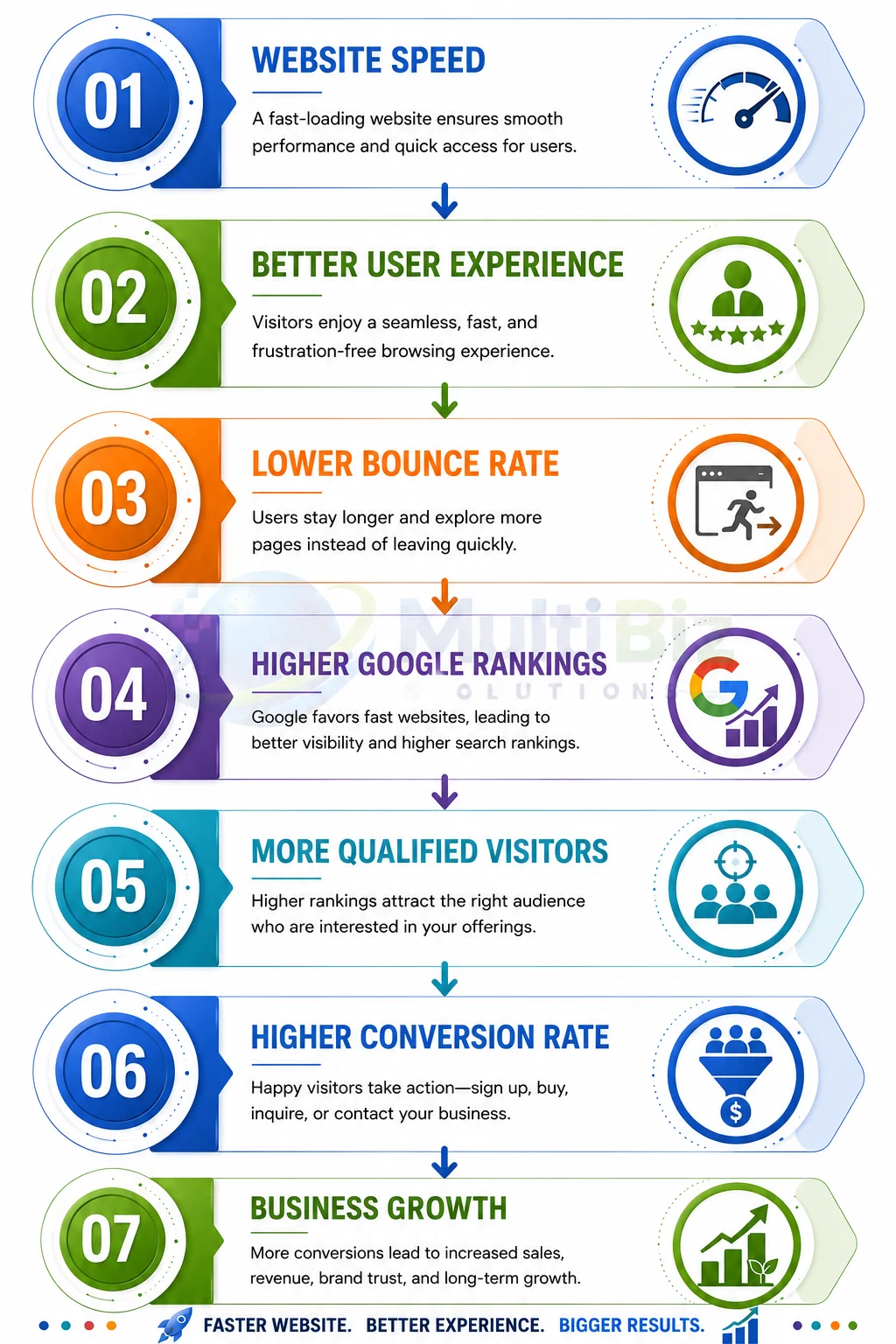
Website speed is no longer just a technical consideration. It directly influences user experience, search engine rankings, and business conversions. Search engines aim to deliver the best possible experience to users. Therefore, they prioritize websites that load quickly and perform smoothly.
A slow website frustrates visitors and often causes them to leave before viewing your products or services. Even a delay of a few seconds can reduce engagement and lower conversion rates. Professional website development addresses performance optimization from the beginning to ensure every page loads efficiently.
Why Website Speed Matters
Visitors expect websites to load almost instantly. If a page takes too long, many users simply move to a competitor. A fast website helps businesses:
- Increase visitor satisfaction
- Improve search engine rankings
- Reduce bounce rates
- Increase page views
- Generate more inquiries
- Improve online sales
- Build customer trust
Performance optimization is therefore an investment rather than an optional enhancement.
Google's Core Web Vitals
Google measures website performance using a group of metrics known as Core Web Vitals. These metrics evaluate real user experiences and influence search rankings.
Largest Contentful Paint (LCP) measures how quickly the largest visible element appears on the screen. Ideal performance: less than 2.5 seconds. Large images, slow servers, and unoptimized code often increase loading times.
Interaction to Next Paint (INP) measures how quickly a website responds to user interactions such as clicks or keyboard input. Ideal performance: less than 200 milliseconds. Fast interaction creates a smoother browsing experience.
Cumulative Layout Shift (CLS) measures visual stability while a page loads. A good website prevents buttons, text, or images from unexpectedly moving after loading. Ideal score: below 0.10. Stable layouts reduce frustration and improve usability.
How Speed Impacts Business Results
Website speed influences much more than rankings. A faster website often delivers:
- More qualified leads
- Higher conversion rates
- Increased customer satisfaction
- Lower advertising costs
- Better return on investment
- Improved brand reputation
Visitors naturally trust websites that respond quickly and function reliably.
Practical Ways to Improve Website Speed
Professional developers apply multiple techniques to optimize performance.
Image optimization — large images significantly increase loading times. Best practices include modern image formats, compression, responsive image sizing, and lazy loading. Optimized images improve both speed and visual quality.
Efficient coding — clean, well-structured code loads faster than unnecessary or duplicated scripts. Professional developers regularly remove unused code and minimize file sizes.
Server-side rendering — frameworks like Next.js generate pages on the server before sending them to users. This approach reduces loading time and improves search engine indexing.
Browser caching — caching stores frequently accessed resources on visitors' devices. Returning visitors therefore experience much faster page loading.
Content Delivery Network (CDN) — a CDN distributes website content across multiple global servers. Visitors automatically receive data from the nearest location, reducing loading time worldwide.
Code splitting — instead of loading every script simultaneously, modern frameworks load only the code required for each page. This technique significantly improves performance.
Lazy loading — images and videos load only when users scroll to them. This reduces the initial page size and accelerates loading.
Website Speed Optimization Checklist
| Optimization Technique | Business Benefit |
|---|---|
| Image Compression | Faster loading |
| Lazy Loading | Improved performance |
| Browser Caching | Better user experience |
| CDN Integration | Faster global access |
| Server-Side Rendering | Better SEO |
| Code Minification | Reduced file size |
| Modern Frameworks | Higher speed |
| Database Optimization | Faster queries |
| Performance Monitoring | Continuous improvement |
Latest Website Development Trends
Technology continues to evolve rapidly. Businesses that embrace modern web development trends gain competitive advantages while providing better experiences for customers. Professional website development should always anticipate future requirements rather than simply addressing today's needs. The following trends are shaping the future of business websites.
Artificial Intelligence Integration
Artificial intelligence has transformed how websites interact with visitors. Modern websites increasingly include AI-powered chatbots, intelligent search, personalized recommendations, automated customer support, and content suggestions. AI improves customer engagement while reducing operational costs.
Voice Search Optimization
More people now use voice assistants to search for products and services. Professional websites optimize content for conversational search queries. This increases visibility in voice search results.
Progressive Web Applications (PWAs)
Progressive Web Applications combine the advantages of websites and mobile applications. Benefits include offline access, faster performance, push notifications, and a mobile-like experience. PWAs reduce development costs while improving usability.
Server-Side Rendering
Server-side rendering has become increasingly important for SEO. Frameworks like Next.js deliver pre-rendered pages that search engines index more efficiently. Visitors also experience significantly faster loading.
Headless Content Management Systems
Modern websites separate content management from frontend presentation. Benefits include greater flexibility, better scalability, faster performance, and easier multi-platform publishing. Businesses can publish content across websites, mobile applications, and digital displays using a single content source.
Motion User Interface
Subtle animations improve user engagement when implemented correctly. Examples include smooth page transitions, interactive buttons, scroll animations, and hover effects. Motion should enhance usability rather than distract visitors.
Dark Mode
Many users prefer dark interfaces, especially during evening browsing. Providing both light and dark themes improves accessibility and user satisfaction.
Accessibility-First Design
Inclusive design continues to gain importance. Professional developers ensure websites remain accessible for users with diverse abilities. Accessibility improvements include keyboard navigation, screen reader compatibility, proper color contrast, and alternative image descriptions. Inclusive websites serve larger audiences while supporting legal compliance.
Enhanced Cybersecurity
Cyber threats continue to evolve. Modern websites increasingly implement multi-factor authentication, advanced encryption, automated security monitoring, and secure cloud infrastructure. Strong security protects both businesses and customers.
Sustainable Web Development
Efficient websites consume fewer server resources and reduce energy usage. Sustainable development practices include optimized code, efficient hosting, smaller file sizes, and reduced unnecessary scripts. Environmentally responsible development also improves website performance.
API-Driven Architecture
Businesses increasingly integrate websites with external services — CRM systems, payment gateways, inventory management, marketing platforms, and accounting software. API integration improves automation while reducing manual work.
AI-Assisted Content Management
Artificial intelligence now assists businesses by generating content ideas, optimizing SEO, improving readability, recommending keywords, and personalizing customer experiences. Human expertise remains essential, but AI significantly improves productivity.
Why Businesses Should Hire Professional Web Developers
Website builders and DIY platforms appear attractive because they promise quick results. However, businesses often discover their limitations as their needs grow. Professional website development provides long-term value through strategic planning, technical expertise, and ongoing support.
Expertise Beyond Coding
Professional developers understand much more than programming. They consider business objectives, customer behavior, SEO, performance, security, accessibility, and scalability. Their solutions support measurable business growth rather than simply creating attractive pages.
Customized Solutions
Every business has unique requirements. Professional developers build websites tailored specifically to your objectives instead of forcing your business into pre-designed templates. Customization improves both functionality and customer experience.
Better Search Engine Performance
Professional developers build SEO into the website architecture from the beginning. Technical optimization includes clean code, schema markup, structured data, fast loading, and mobile responsiveness. These elements improve long-term search visibility.
Greater Security
Security should never depend solely on plugins. Professional developers implement multiple protective measures that significantly reduce cyber risks. Secure websites protect both customer information and business reputation.
Long-Term Scalability
Businesses evolve over time. Professional website development allows future expansion without rebuilding the website from scratch — new services, customer portals, e-commerce, mobile applications, multilingual support, and API integrations. Scalable architecture protects your investment.
Reliable Technical Support
Every website occasionally requires updates or improvements. Professional developers provide maintenance, performance optimization, bug fixes, security updates, and feature enhancements. Reliable support minimizes downtime and protects business continuity.
Better Return on Investment
Although professional website development requires a higher initial investment, it usually delivers lower long-term costs. Businesses avoid frequent redesigns, performance issues, security breaches, SEO problems, and poor customer experiences. A professionally developed website continues generating value for many years.
DIY Builders vs. Professional Website Development
| Feature | DIY Website Builders | Professional Website Development |
|---|---|---|
| Custom Design | Limited | ✔ Fully Customized |
| Performance | Average | ✔ Optimized |
| SEO | Basic | ✔ Advanced |
| Scalability | Limited | ✔ Excellent |
| Security | Standard | ✔ Enterprise-Level |
| Business Growth | Restricted | ✔ Future-Ready |
| Integrations | Limited | ✔ Unlimited |
| Technical Support | Generic | ✔ Dedicated Expertise |
| Long-Term Value | Moderate | ✔ High |
Professional Website Development Is a Strategic Investment
Many business owners view website development as an expense. Successful organizations see it differently. A professionally developed website becomes:
- A sales representative
- A marketing platform
- A customer service channel
- A lead generation system
- A branding tool
- A business growth engine
When designed correctly, your website works around the clock to attract visitors, answer questions, build trust, and convert prospects into loyal customers.
As digital competition continues to increase, investing in professional website development is no longer optional. It is a strategic decision that supports long-term growth, strengthens your competitive position, and creates lasting value for your business.
Final Thoughts
A professional website has become one of the most valuable assets a business can own. It represents your brand, communicates your expertise, supports your marketing efforts, and works continuously to attract potential customers. In today's digital economy, customers expect businesses to provide fast, secure, and user-friendly online experiences.
Professional website development is not simply about creating attractive pages. It is a strategic process that combines thoughtful planning, exceptional design, modern technologies, technical excellence, and ongoing optimization. Every stage contributes to delivering an outstanding experience for visitors while helping your business achieve measurable results.
Modern frameworks such as Next.js have transformed the web development landscape by delivering remarkable performance, enhanced security, and improved search engine visibility. Businesses that embrace these technologies position themselves ahead of competitors while providing superior experiences for their customers.
However, technology alone does not guarantee success. A successful website begins with understanding your business goals and your customers' expectations. It requires careful planning, engaging content, intuitive navigation, responsive design, and continuous improvement. When these elements work together, your website becomes a powerful platform for building trust, generating qualified leads, and increasing revenue.
Whether you are launching a new business, expanding into international markets, or modernizing an existing website, investing in professional website development is one of the smartest long-term decisions you can make. A well-built website continues delivering value every day by attracting visitors, answering customer questions, and converting opportunities into lasting business relationships.
As digital competition continues to increase, businesses that prioritize quality, performance, and user experience will continue to outperform those relying on outdated websites or temporary solutions. The future belongs to organizations that view their websites as strategic business assets rather than simple online brochures.
If your goal is sustainable growth, increased visibility, and stronger customer engagement, now is the ideal time to invest in a professionally developed website.
Ready to Transform Your Online Presence?
Your website should do more than look impressive. It should actively help your business grow.
At Multi Biz Solutions, we specialize in creating modern, high-performance websites using the latest technologies, including Next.js. Every website we build is designed to be fast, secure, mobile-responsive, and optimized for search engines from day one. Our web development services include:
- Corporate Website Development
- Business Profile Websites
- E-commerce Solutions
- Landing Pages
- Blog Development
- Custom Web Applications
- Website Redesign & Modernization
- Search Engine Optimization (SEO)
- Website Maintenance & Support
From planning and UI/UX design to deployment and ongoing maintenance, our experienced team manages every stage of the development process with precision and professionalism. Whether you are a startup, a growing business, or an established enterprise, we are committed to building digital solutions that strengthen your brand and deliver measurable business results.
Contact us today for a free consultation and discover how a professionally developed website can become your most valuable digital asset.
Frequently Asked Questions
Ready to put this into action?
Explore our Web Development services or get a free consultation with our team.